
Prepare with AI. Arrive with Better Questions.
Use AI to review patient history, spot changes, and prepare better questions without jumping to conclusions.

The Pattern Was Real. It Just Wasn’t the Point.
The client had been talking a lot about work over the past few months.
A difficult meeting. A demanding manager. Trouble sleeping before presentations. Feeling drained after long weeks.
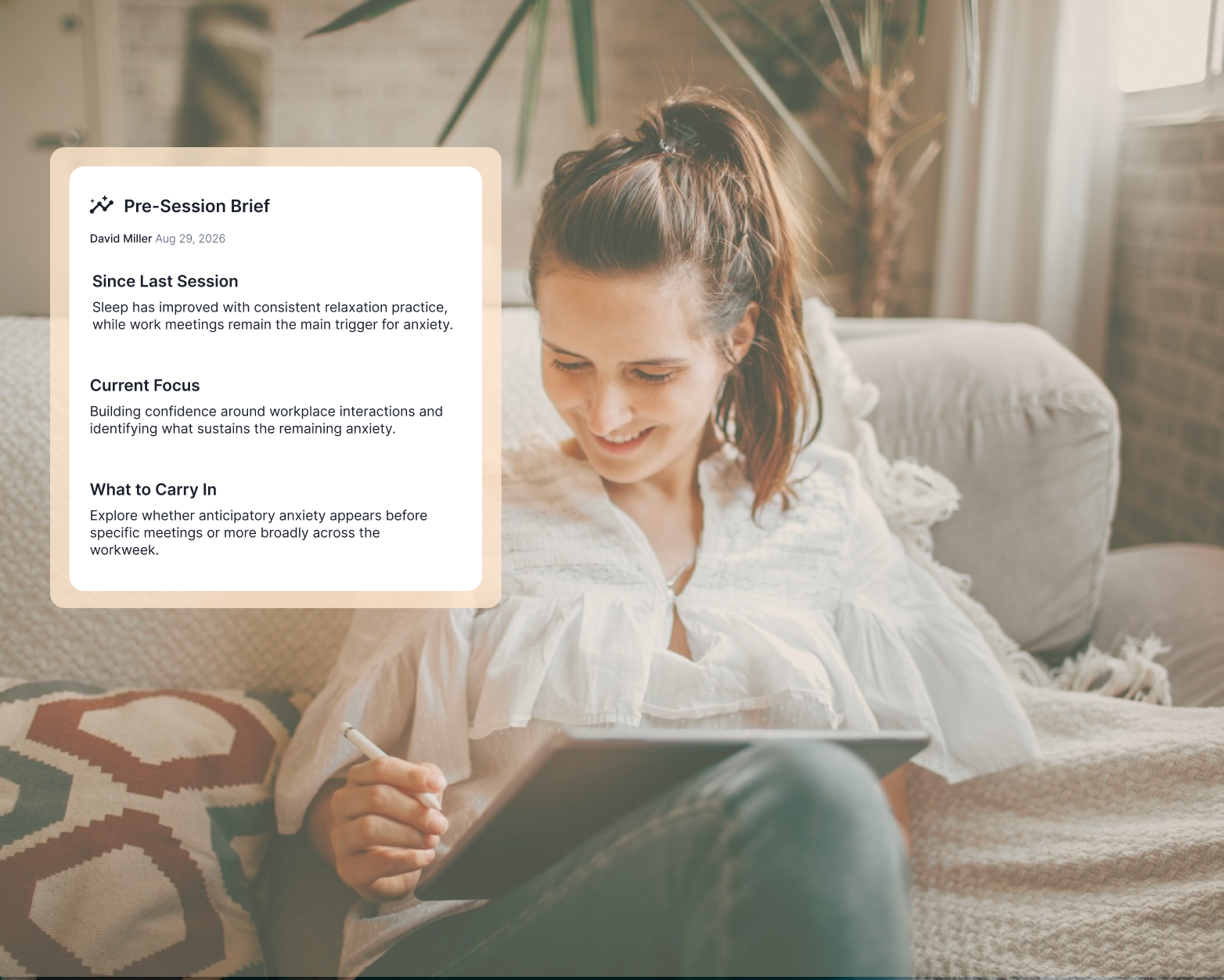
Before the next appointment, the therapist reviewed an AI-generated summary of the patient’s history.
It highlighted a pattern:
Periods of increased anxiety consistently appear alongside elevated work stress. Recent sessions suggest workplace pressure remains a primary trigger.
It sounded right.
The therapist remembered each of those moments. Seeing them together made the pattern feel even stronger.
She opened the next session with it.
“So, has work been feeling heavier again?”
The client looked surprised.
“Not really. Work’s actually been fine.”
For a few minutes, they stayed with work anyway.
Deadlines were manageable. The manager had backed off. Sleep had improved.
“Actually, there’s something I wanted to talk about. My dad called.”
The call had come the week before. They had barely spoken for almost a year.
As they talked, the therapist remembered earlier sessions where family had surfaced briefly, usually inside larger conversations about work, sleep, or relationships.
Those moments were in the record too. They just hadn’t stood out in the summary.
The therapist had prepared to follow a pattern.
The client had come to talk about a phone call.
How to review an AI preparation brief
Use AI to surface context, not to set the agenda.
| What to check | What can go wrong | What to do |
|---|---|---|
| Is the pattern real? | Repetition can make a theme look more important than it is. | Treat patterns as questions to explore, not conclusions. |
| What is missing? | Important but less frequent themes can disappear from the summary. | Look for unresolved issues, contradictions, and overlooked context. |
| Is it still current? | Old concerns can read like they still define the client today. | Separate history from recent changes. |
| Fact or interpretation? | AI can turn what happened into an explanation of why it happened. | Separate documented facts from inferred meaning. |
| Will it steer the session? | A convincing brief can pull attention toward one topic too early. | Let the client’s current experience determine where the session goes. |
Start Your Free Trial
Take 14 days to see how well it fits the way you already practice.